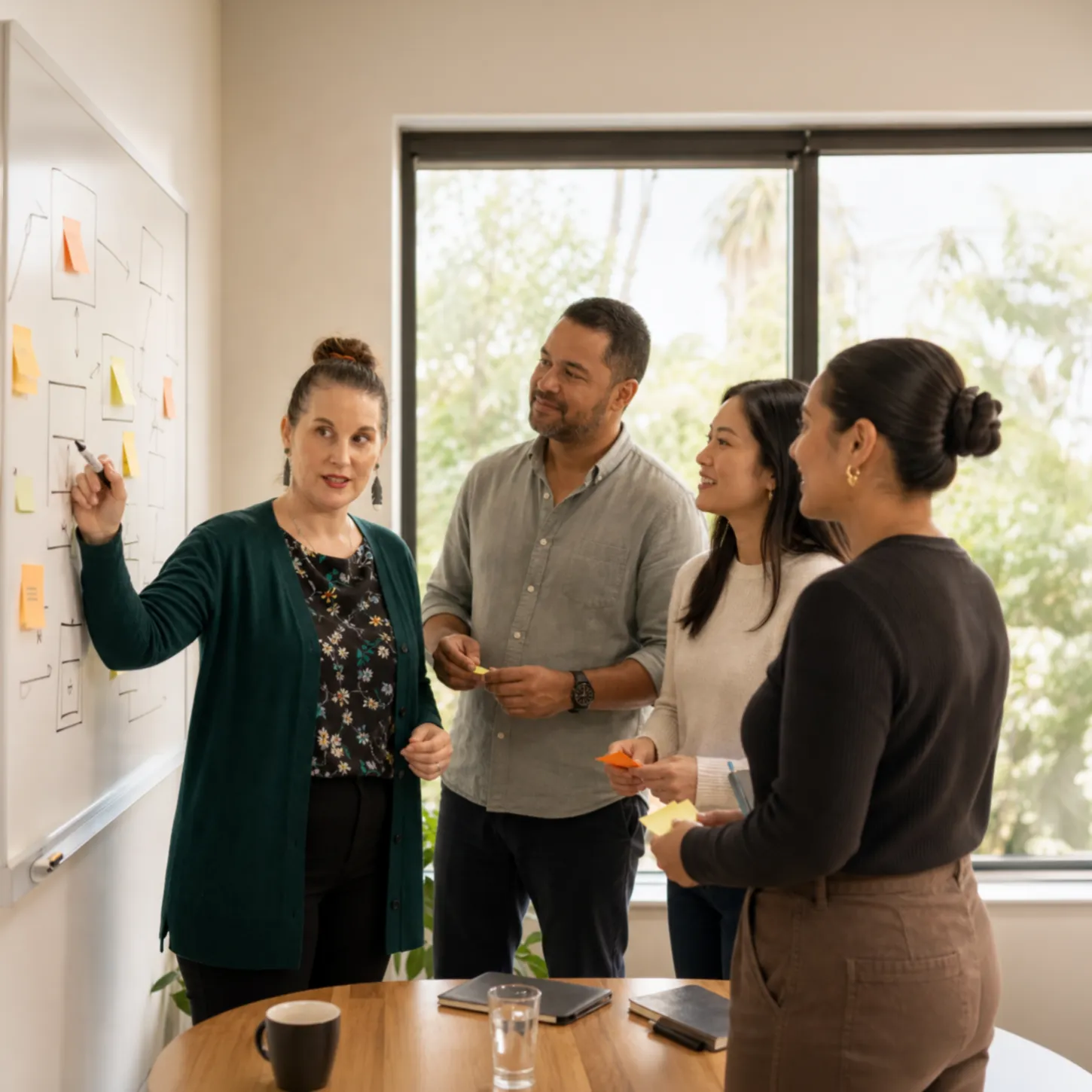
Is this you?
When do you need a learning strategy or capability framework?
“We know there's a problem, but we don't know where to start.”
“We keep getting ad hoc requests and end up being reactive.”
“It's taking too long for people in operational roles to start performing.”
“We've been asked to overhaul induction, and the priorities keep conflicting.”
How we work
How does Optimism build a learning strategy or framework?
01
Understand
We review what you already have and talk to the people who know the work, from leaders to subject experts.
02
Map
We map out the capability each team or role needs, in a structure that people can see and discuss.
03
Prioritise
We show where the gaps are biggest and where the quick wins sit, so effort goes where it counts.
04
Plan
We shape the learning approach for each level, with the resources, budget, timeframes and measures to match.
What you get
What do you get from a capability framework?
A sense of order
Everything has its place, so new requests slot in rather than pulling you off course.
A visual map
One picture of capability that makes stakeholder conversations quicker and clearer.
Clear priorities
Fresh structure that makes it easy to spot what matters most and what can wait.
Realistic planning tools
What you need to plan resources, budgets and timeframes with confidence.
Recent work
Strategies and frameworks we've built
Construction Procurement Framework
Lifting the procurement standard across the construction sector.
Read the case study →

Capability Assessment Tool
Supporting HR practitioners to identify development opportunities on the path to Chartered Membership.
Read the case study →
Product Knowledge Framework
Increasing sales by equipping the global sales team to confidently sell milk products and applications.
Read the case study →
In their words
“Really pleased with how this has turned out!”
Construction Procurement Leader, MBIE
FAQs
Questions about learning strategies and capability frameworks
How does it work?
We start with an audit of what you already have: your current learning, roles and plans, plus conversations with the people who know the work. From there we map the capability you need, show where the gaps are, agree priorities with you and turn it into a plan you can act on and share with stakeholders.
What's the difference between a learning strategy and a capability framework?
A learning strategy is a plan of action for reaching a big goal, like embedding a strategic initiative, delivering a change project, bringing a new product to market or rolling out a regulatory change. A capability framework brings order to a complex area of learning and performance, so you can set priorities and put resources where they'll have the most impact. Many projects need both.
When does a framework help most?
When you know there's a problem but not where to start, when ad hoc requests keep you reactive, when new people take too long to perform, or when a big piece of work like induction has too many levels and competing priorities to hold in your head.
Will I need to recreate all my learning when I get a new framework?
No. As part of the audit we map your existing learning against the framework, so you can see what already does the job, what needs a refresh and where the real gaps are. New learning only gets built where it's needed.
Testimonials
What our clients say
I have had the pleasure of working with the Optimism team over the last 14 months. In my opinion they are professional, efficient, thoughtful and innovative. They have helped me deliver my project outcomes of a highly engaging learning pathway and if I had the opportunity I would jump at the chance to work with them again.
We found Optimism to be highly professional, innovative and easy to work with. They took the time to understand us and our challenges up-front meaning we ended up with exactly what we needed at the end of the process. In addition the quality, performance to agreed timelines and budget were spot on.
Really appreciate everything you have done and I know going forward, the staff will really enjoy this type of learning – THANK YOU