Case study
·
Air New Zealand
Baggage Handlers
Reducing the time to operational competency for baggage handlers through blended learning.

Industry
Aviation & Transport
Focus area
Technical & Role-specific Training || Employee Induction & Onboarding
Approach
eLearning & Digital Learning || Immersive & Experiential Learning || Performance Support & Workplace Tools || Video & Animation || Workshops & Facilitated Learning || Coaching & Development Toolkits
Service
Targeted learning solutions
At a glance
What was the challenge, and what changed?
The challenge
What we built
The result
The full story
How did the project come together?
About our Client
Our client operates a global network that provides air passenger services and cargo transport services to, from and within New Zealand to more than 15 million passengers a year.
The Brief
Our client engaged Optimism to bring their baggage handling training into line with the company’s brand and values, to ensure that all baggage staff are well-equipped to deliver the service their customers know and expect. The training needed to be relevant across all the client’s ports.
Our Role
We conducted an initial focus group with key stakeholders to determine the business objectives and key success factors of the project.
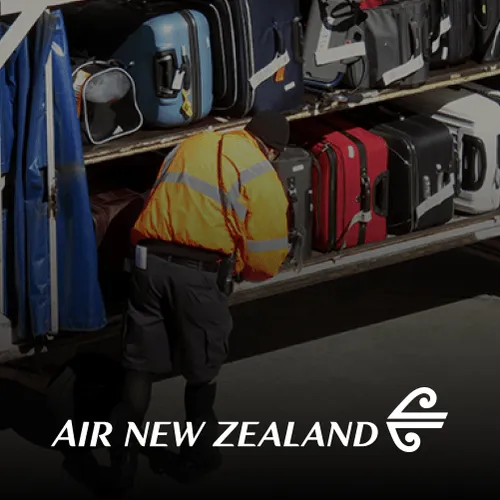
We reviewed existing training materials and approaches, and spent time in baggage areas across a range of ports, observing and discussing the baggage handling process and role with an on-job trainer. This gave us a hands-on appreciation of the concepts and tasks that a new recruit needs to get to grips with in order to be a safe and effective member of the team.
We designed an integrated learning solution to equip new baggage handlers to get up and running safely and efficiently, while at the same time developing an understanding of how their role contributes to the brand and strategy as a whole.
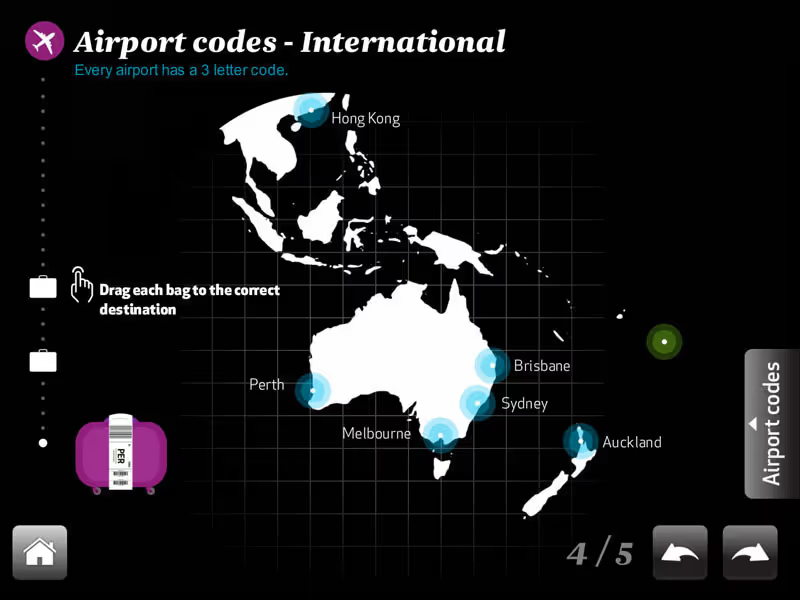
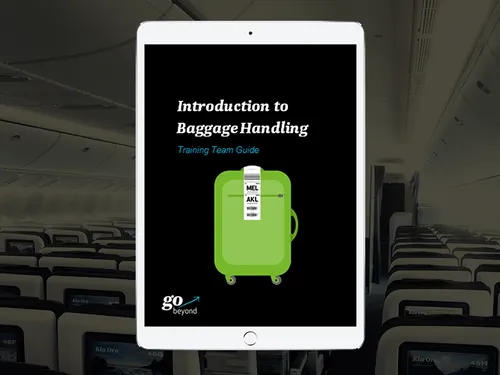
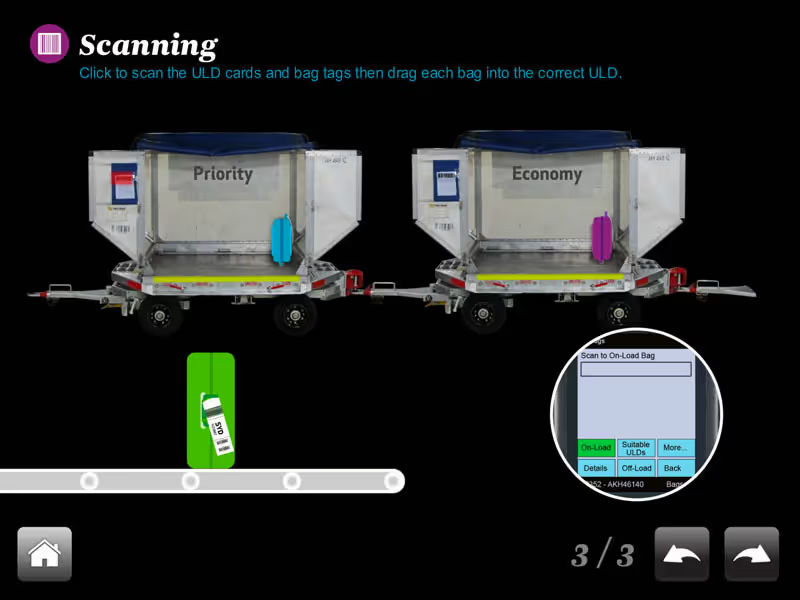
We developed a blended, multi-media approach including video, a face to face workshop, eLearning modules and on-job coaching. The package contains regular progress checkpoints and a final on-job competency assessment to prove that the learning outcomes have been achieved.
The business objectives defined in the initial focus group session were kept at the forefront of all review stages throughout the project, ensuring that the final deliverables were on target to meet the business need.
The Results
Benefits to the client are:
- Reduced time to competency.
- Simulated practice in the eLearning modules allows learning to take place with no risk to the business in terms of safety, accuracy or on-time performance.
- Consistent training across ports, aligned with overall company strategy.
- Less face to face training time required reducing cost of training.
- Regular checkpoints identify any learners who are struggling, allowing trainers to provide support where necessary before on-job performance issues arise.
- eLearning modules provide automated tracking and real-time reporting of completions for management purposes.
Benefits to Staff are:
- More attractive, engaging and user-friendly materials.
- More effective training through individual engagement and interaction with the content.
- Alignment with overall brand and strategy communicates a greater sense of value and purpose in the baggage handling role.
In their words
The team at Optimism were always professional - they did what they said they would do and asked excellent questions to understand our needs. We have cut down training time and improved on the rate to competency time frame. We’re thrilled with the result!
Training Manager, Ground Operations Training, Air New Zealand
More like this
What similar projects has Optimism delivered?



Got a challenge like this?
Tell us about it. We've probably seen something similar.